Thursday, 16 February 2017

Living Gallery Risk Assessment

Our ideal number of people present in the room whilst performing is around 6-8, this is because everyone would have plenty of space and it is still quiet an intimate number of people which will create an intimate and enjoyable setting for our audience. We can, however, fit comfortably up to 17 people in the room at any time.


We will instruct our audience with the medium of cards to red out one of the pre-prepared statements and then keep it. This will mean that the audience feel comfortable in taking action with the piece, but we also don’t give them too much information so they can still work out what the piece is about. We also have written out own statements as we don’t want to place the audience with too much responsibility.


Living gallery - Performance

Our living gallery exhibition went really well. We were able to produce something that most people understood and were eager to take part in. We had a Science beaker which held all of the questions that the audience should ask us. Everyone apart from two people understood what to do when they entered the room. This was most likely because ask people entered we all pointed towards the beaker and the rest was pretty self explanatory.

However, there was a couple that entered the room and were clueless. Mason, Nick and myself pointed to the beaker and the couple took a piece of paper and read it in their head and then just stared at us. This of course was not what we wanted to happen and eventually the couple left and saying 'this is awkward'. We hoped that our sign on the door that everyone entered which read 'Come in and ask us a question' would make it obvious as to what the audience members should do. But I think most audience members were oblivious to the sign but just figured out what to do once inside. To have insured that everyone know what to do, we could have verbally told them however this would have ruined our mannequin portrayal.

Something that worked well would have been the fact that practically everyone understood what to do and seemed to enjoy participating in our gallery. If the audience didn't want to participate then our living gallery would have been quite lifeless. Although our piece would have been even better if we had more paint and longer time to clean ourselves up before moving onto our other performance. This is because we were so immersed in our responses to the questions that the paint we were using got everywhere. This meant that by the time it came to cleaning ourselves up, we had to really hurry. It also meant that we didn't have enough time to completely tidy the space we were working in. 

Overall, I was delighted with our living gallery. All of the audiences comments were positive and questions like 'how does southern rail make you feel?' made them laugh and add there own little comments like 'i think I might need some of that black paint (black - Anger). This meant that there was a constant juxtaposition of light laughter and serious questions like 'How do you feel when people are stereotyped?'. Something that was unexpected but made me happiest was probably the fact that some of the audience members decided to ask their own questions. For instance a little boy asked 'How do planes make you feel?'. I think the variety between Mason, Nick and my answers was the most interesting because something that would make me sad, would make Mason angry and Nick jealous. This demonstrated the fact that all of us have different brains that react differently to different things.

Something that I will take from our experiment was the fact that my answers to most of the questions was 'Anger'. Maybe this was just because of the questions that the audience asked but either way it was quite sad. Even things that we are meant to have a positive view on such as the police, responses to them were either sad or angry.

Monday, 13 February 2017

Gallery Images Linked to Performance


This image relates to our final piece and is translated in the way that we present ourselves to the audience. We stand with a strong and open stance and are open to whatever questions the audience want to ask us.

This sculpture is a plaster mould of the artist’s body, reinforced with fiber glass and encased in a skin of soldered lead. Gormley uses his own body to examine the physical and spiritual relationships between humankind and the natural world. He says: ‘sculpture, for me, uses the physical as a means to talk about the spirit…a visual means to refer to things which cannot be seen’ .


This relates in the sense that we explored issues that are normally covered up and so we revealed the rawness and truth in society. We didn't cover anything us, instead we answered them.


This links because we all see things differently and interpret things in different ways. This means that some things that may bother or tie me down, might not bother others.

Combining human and animal forms and mixing recognisable and unfamiliar elements, Jane Alexander’s African Adventure. The objects positioned among the figures include sickles, machetes, a Victorian christening dress, boxes for explosives, a steel car and a worker’s overalls. These relate to themes such as migration, trade, labour, colonial legacy, conflict and faith. But African Adventure does not present a particular moral or political message, as is often expected from work made in South Africa in the immediate post-apartheid era. Like the hybrid human-animal characters who are both confrontational and vulnerable, the work is ambiguous, moving between realism and metaphor, mixing the everyday with the uncanny. (source: http://www.tate.org.uk/visit/tate-modern/display/artist-and-society/jane-alexander)

Room plan:


Tuesday, 7 February 2017

The Mind - Lesson 6 - Tuesday 14th February 2017


THE PERFORMANCE:


Prior to our performance we were told to remain focused since some of us were switching off and to be alert at all times in case the protagonist (Rose) was to choose us to becomes her (and then if we were Rose to respond to what we were seeing). I think we all achieved all of the improvements we were given which allowed our show to maintain a smoothness that couldn't have been achieved if actors weren't always paying attention to Rose.

Some of the strengths that shone through during our performance included the shows unpredictability which stemmed from our improvised work and the reactions of our audience. For example, at the end there was an ensemble moment in which we tied the audience members memories to our balloons, there was a really beautiful feeling in the atmosphere, it was quite cathartic. I think this was achieved because of our intimacy with the audience earlier on in the show and so everyone was feeling the same way and were all open to sharing those emotions. This meant that when it reached this moment, everyone was relaxed and shared the same buzz.

The girl that I opened my box with told me that I made her cry and gave me a hug at the end which is also evidence for the connections made between us actors and the audience. This made the work very relatable which gave it more meaning. The fact that most of the audience consisted of family members would also put dementia into retrospect because their memories which were displayed on the memory wall and the people that they love and are in front of them could potentially die of Alzheimer's.

There was a nice pace to the piece and despite issues with finding the right numbers to choose a box, we managed to move on and continue without the show becoming disrupted. Because of this, as the show went on we just became more confident in ourselves and our audiences responses.

However, we didn't get through as many of the improvised individual memories for the audience as we'd thought that we would have. Which was fine, but just meant we didn't get as much as we'd hoped done. Lack of instructions also left the audience members confused at times. We could have improved this by giving the audience members a set of instructions via a little booklet or even by verbally telling them in the games room of what is expected of them during the actual show. This would have allowed a smoother run and the audience would have been aware of what the numbers on their tags meant and therefore made sure they kept it safe and were ready for participation if asked to.

This terms use of experimental theatre has been interesting and fun to be a part of, I have appreciated aspects of it such as its unpredictability which has kept me on me feet and active, however i think it's quite a difficult en re to gasp and ever fully understand. Our piece was experimental because it was based around the unknown. Anything could have happened in our piece because most of it was left up to the audience. This did make me feel a little bit nervous but I defiantly enjoyed it. We had no control over what could happen which in itself also links in with dementia because the individuals suffering with dementia don't have always have control over their choices or what they understand.

We also stayed true to our practitioner (Antonin Artaud) by using things such as piercing lighting and abrupt sound which shocked the audiences senses and wasn't necessarily a comfort to listen to at all times. For example, some of the music used was played backwards and so it sounded twisted and sinister. This made me feel on edge and almost seemed to enhanced the lighting because of it's sharpness. It made me feel as though everything was all over the place and like broken is shards that were put back together randomly. This would definitely link in with the breakdown of the brain and confusion. We also performed without having a script which also went with Artaud's style. And our overall performance was closest to Peter Brooks idea of 'Immediate Theatre' because it will always be current and a timeless issue which we managed to perform/present 'in the moment'.

Other elements such as multiroling also seemed to have a deeper meaning. For example, if I review a previous lesson in which we watched an Emmerdale episode that had the same actors playing different characters to demonstrate how sufferers of dementia can often confuse people and places. Our use of multiroling portrays a similar meaning because it shows a group of people who could potentially play any character in the piece and  the play making sense. After all, we are all images stored in the hippocampus but when the hippocampus begins to decay, those images can get lost or become intermingled with other memories. It can become difficult to distinguish reality and fragments of the imagination.


Gallery - Lesson 5 - Thursday 9th February 2017

We finalized questions and then walked around the room to find one that suited our piece best. We ended up choosing a science lab because it linked in with the theme of emotions and chemistry of the body. We are also going to place ourselves on top of the lab desks  because that is where experiments take place and so we will be the equivalent to the reaction taking place. This will make our piece site specific.

I also did extra research and found out that when different elements react with fire, they turn different colours. I might incorporate this into the coloured paint and link the harshness of different elements with different emotions (and so the coloured paint for that emotion). However, it could get complicated and be unnecessary so we'll decide by next week.

Taken from an AQA Triple Science text book


We also decided that we would wear all white instead of putting the paint onto our skin and being in underwear. This is because otherwise we won't have enough time to remove the paint and start our show which is going to be immediately after this performance.

The Mind - Lesson 5 - Tuesday 7th February 2017

We didn't get the opportunity to work in our performance space today so we spent time refining our work. First of all we decided what games were going to be played in the reception area of our show. My group chose to be in charge of the game 'concentration' but moulded it around the mystery of the lost memory by having things such as neurons and brain cells as the cards that need to be matched. Once a match has been found, it is then passed around to a group of scientists that examine the cards as though it's evidence and make some notes. This worked well because it meant that we would be playing games that make the audience use their brains and so our main theme is introduced gradually and implicitly, leading up to the climax of the show.

 Once we were all confident with the presentation and layout of our games we allowed the rest of the class to come and test them out. The tour began down stairs and we worked our way upstairs, first by writing a memory we'd never want to forget onto a post it note and then by working our way into the games room. There were also other games such as Kim's game and the magic cup game. After this, we continued and ran the whole performance. The performance ran smoothly apart from the individual group moments in which certain things seemed to be amiss. This included things such as the fact that different people's music choices didn't quite match the movement of the piece or that sections just needed tightening up.

We then had the rest of the lesson to work in those groups and reflect on our feedback. My group decided to not only change our music choice but also the entire piece. It's now a much more meaningful and simple piece which I think will be more effective and make it easier to be understood. This is an improvement to the one it replaces because everyone is able to perform it better and it's not just one persons ideas.

Gallery - Lesson 4 - Thursday 2nd February 2017

Here's a list of the questions that the audience will ask us in our performance:

How do you feel when people don’t give up their seats on public transport?


When boys are being stereotyped, how do you feel?


How do you feelings towards sexism?


How do you feel about going home?


How do you feel about death?


What does your best friend make you feel?


What does your family make you feel?


What are your feelings towards pornhub?


How does daner make you feel?


How does food make you feel?


How does football make you feel?


What do you feel when people flirt with your significant other?
How do black people make you feel?


How do white people make you feel?


How do gangs make you feel?


What do you feel now?


How do you feel about gang violence?


How do you feel about expensive food?


How do you feel when bus drivers can see you’re running but drive off anyways?


How do you feel towards racial stereotyping?


How do you feel about UKIP?


How do you feel about animal cruelty?


What do rude people make you feel?


How do you feel towards people that are loud on public transport?


How does Southern Rail make you feel?


How do the train strikes make you feel?


How do you feel towards people that wear socks and sandels?


What do you feel when you see young children wearing make-up?


How do you feel when people don’t finish their sentences?


How does other peoples lateness make you feel?


How do you feel when someone you love is sad?


How do you feel when you no longer fit into certain clothes?


How does having to do exercise make you feel?


How do you feel when you discover that you have a hole in your sock?


How do you feel towards charities?


How does cancer make you feel?


How do you feel when people lie?


How do you feel when you see a homeless person?


How does food make you feel?


How does your significant other make you feel?


How does your bed make you feel?


How does sleep make you feel?


How does other people’s success make you feel?


How does COD (the playstation game) make you feel?


How does FIFA ( the playstation game) make you feel?


How do you feel about people that use the word ‘like’ excessively in sentences?


How does music make you feel?


How does boxing make you feel?


How do you feel when you win things?


How do you feel when you get free stuff?


How would a random make out session  make you feel?


How do relationships make you feel?


How do you feel about the dark?


How do you feel about waking up early?


How do you feel about being uncomfortable?


How does fast food make you feel?


How do you feel when you can’t understand things?


How does being angry make you feel?


How does WIFI make you feel?


How do you feel when you go somewhere with no WIFI?


How do you feel when you watch TV?


How do you feel about Leonardo Dicaprio?


How do you feel about Megan Fox?


How do you feel when you talk to someone with an accent?


How do you feel when you have to get out of your comfort zone?


How do roadmen make you feel?


How do you feel when you’re in the company of a spider?


How do horror movies make you feel?


How does loneliness make you feel?


How do the police make you feel?


How do you feel when you trip in public?


How do clowns make you feel?


How do you feel about religion?


How do you feel about dementia?

Sunday, 29 January 2017

The Mind - Lesson 4 - Tuesday 31st January 2017

We started off with a run through of our performance and added in extra details along the way. One of the sections that we added was everyone going into the back room to collect a balloon. Everyone then has a pair that enters the space with them from the opposite side. The pair go together and then run within the audience, lie down into a fetus position before moving to the side of the stage. Once everyone else has done this, we go up to an audience member and tie their memory to the balloon before setting it free out of the window. In order to get to the windows a curtain is pulled back and a wall of photographs from the audience members memories is revealed. This works well because it is so personal and so it’s extremely relatable to the audience. If we were performing to an audience that didn’t consist of family members then our performance wouldn’t have such a powerful effect on the audience.

There are also voice overs of family members that are played. It's weird hearing peoples voices when you know that they are so close to you and hearing about their experiences with such a horrible thing is almost heart breaking in itself. My mum'd done a voice over Which will be played and when I listened to it I felt quite weird because even though you are there with this person or you know then on such a personal level, some of the things she said I didn't even know. There will also be a voice over from one of my peers which almost represents the fact that dementia can affect anyone of any age.

The Mind - Lesson 3 - Tuesday 24th January 2017

We managed to construct most of our show today. We began by watching a video ( https://www.youtube.com/watch?v=_hRBPrfDQVI ) where a man was testing a women for dementia. We noted some of the questions such as:
- What is 100-7?
-What is your name?
- Repeat after me: Apple, Penny, Table
- What year is it?

Things we added to our performance:

We placed ourselves behind a curtain and sat with our naked legs and toes sticking out. This gave the piece a morgue type look which created powerful imagery and in my opinion represents how we all end up, whether we’ve got dementia or not, we all have one inevitable ending. To add authenticity to this section, we are also hoping to get little tags to place around our toes.

We added sections to our physical piece however there’s not much teamwork within the group and only one person's ideas seem to be being echoed throughout our piece. The whole thing is also quite messy however we have plenty of time to tidy it up. Although I’m not completely sure that the piece has any relation to the vietnam war. Overall it looked good however it’s relevance was slightly amiss.

We then went on to constructing our piece by creating a moment in which we got into pairs and one person had to imagine that they’d forgotten how to put on an item of clothing. I chose to try and put on a shoe. At first I studied the shoes and then played around with it, pretending it were a baby, tying the laces around my wrists, putting my hands inside of it but never quite allowing myself to understand where it was meant to go. Next our partners came out and helped us put our item of clothing on. At first I was hesitant and reacted in the way that a child might if you tried taking their favourite toy off of them. I moved away a bit and moved the shoe away from them. Slowly I allowed her to take the shoe off of me and help me. My partner put the shoe in front of me and indicated towards my foot and then the shoe so I naturally lifted my foot up and put it straight on top of my shoe. This made me think about how we’re all so used to doing complicated tasks like putting on shoes that we forget about how the mechanics of it can be difficult. For instance I know that it took me an extremely long time to learn to tie my laces and so for individuals suffering with alzheimer's putting on a shoe could be the equivalent to that. The brain doesn’t understand things it doesn’t know and I think it’s very scary to think that at any age you could potentially forget to do what seem to be the simplest everyday task.

We form the brain at the back of the room by clustering together and intertwining our arms and weaving in and out of one another. We plan on having fairy lights wrapped around our arms as we do this which will help to emphasise the pulsing of the brain and symbolise it’s power.   

Thursday, 19 January 2017

Gallery - Lesson 3 - Thursday 19th January 2017

frgthtfhjxr


Displaying Snapchat-1504699712.jpg

The Mind - Lesson 2 - Tuesday 17th January 2017

Today's lesson was completely experimental with the construction of what might and what might not work. We began the lesson by having a cardboard box in the middle of the room, one by one we then went up to the box and opened it. There was a torch inside the box and so when it was opened this light just comes rushing out towards the person's face who has just opened the box. As we looked into the box we imagined our favorite and most valuable memory that we would never want to forget. This looked extremely effective and was also quite reflective as an exercise and I hope we manage to somehow put it into our final piece.

We also all had the oranges that we were told to bring in because 'A brain affected by the disease can weigh around 140g less than a healthy brain. That’s about the weight of an orange' (taken from: https://www.dementiablog.org/the-future-of-dementia-is-orange/ ). Because of this, we have decided to use oranges in our piece as a symbolic gesture and a wake up call to our audience members. During the lesson we were each given a post it note and told to write our dearest memory. Surprisingly I found this harder then I thought I would, actually trying to think of a memory I found really hard even though there are thousands that I have. It also allowed me to put things into retrospect because it's one thing to not be able to think of a memory at a certain moment in time,  but it's another not being able to remember a memory virtually ever. After we'd written down our memories we took someone else's and improvised the other persons memory.

The memory that I tried to recreate was about someone's granddad's birthday party, he made a speech and talked about how beautiful his wife was and how he was so lucky to have her. The actual experience of reading someone else's memory was quite overwhelming especially when imagining that one day that memory could decay until it no longer exists at all. I normally find it really difficult doing improvised work, but having such a meaningful stimulus, I was able to create wok that I was proud of, really quickly. We then had to add the oranges into our improvised solos. I didn't find it difficult to incorporate the orange either, in fact it added an extra layer to my piece. For example, in one section I dropped the orange from a high level and then caught it at a lower level which acted as a transition. I also help the orange out during one section, admiring it as though it were the most beautiful and loving person that I knew before pulling it to me chest and into where my heart is located.

Rose was then introduced to us, and we had to perform our memories to her as though they were her own and we were trying to make her remember. Then, one by one, we sat by her and read her the memory from the post it note. Rose then got us and began to peel the orange,watching her do this was very sad and no one really knew what to do. Whilst she was doing this, I really wanted to do my improvisation and then leave the room because it would have looked her memories were being peeled away from her until she was left with nothing. However, I didn't do this because we were in a lesson and it would have been weird. After a while of her peeling the orange, Miss came in to the scene with some wipes and took Rose away to get cleaned up saying 'did no one else help you?'. We all of course felt extremely bad for not helping at this point and of course would of if we knew that was an option. Although, the scene turned out looking really nice and it would have been interesting to see if the scene would have benefited or not from our interference.


Image may contain: one or more people, people dancing, people standing, night and indoor


Image may contain: one or more people and indoor


Image may contain: one or more people and night


After lunch we created a timeline of Rose's life:


Image may contain: text
9


No automatic alt text available.


No automatic alt text available.


No automatic alt text available.


No automatic alt text available.


No automatic alt text available.


No automatic alt text available.


Image may contain: text


We then chose a section of the timeline and got into groups so that we could create a physical piece to represent the part of the timeline we have. My groups section is about when she protests about the Vietnam war. We rehearse Here's a video of what we created:


Our group was really good at lifts and being able to create a quantity of work, however we need to work on quality and transitions. I was really happy with the amount of ideas put forwards, now it;'s just a case of making everything fit together well. I really likes Tara's groups memory piece because it is very syncranised and technical however looks very simple yet effective. Justine's groups piece was also amazing and their use of physicality worked well.


Gallery - Lesson 2 - Thursday 12th January 2017

In today's lesson, Mason joined Nick and I. Together we explored how different things make us feel, and then compared how we sometimes shared different feelings towards the same thing. We had: 'Anger', 'Sadness', 'Happiness', 'Excitement', 'Jealousy' or 'Fear' to pick between for each of the statements that we came up with. It was quite interesting because something like 'gang violence' seemed to anger me because in my opinion it was pointless and ongoing, whereas Nick feared it because he wanted to avoid it completely, and it made Mason sad because of past experiences and stereotyping that coincided with it.

 The statements that we came up with will be written on pieces of paper which the audience will have to take and then read aloud. We will then put the paint that represents the emotion that we feel, on our skin. Something we realised that we will have to think about is whether or not to have the coloured paint labeled so that the audience can clearly see what colour represents what emotion, or whether to leave it unlabeled so that it's all down to each individual audience members interpretation.

A few of the notes of the things that we feel strongly about.

Towards the end of the lesson we performed our showcase to the class however we had to say the emotion aloud rather then use paint and so the powerful imagery that we wanted to use was lost. I really like the idea of doing it in silence or without words at the very least because it's almost like a leap into the human mind (we are showing the audience how we react on the inside by showing them colour on our outside. It's quite private and personal in a way).

When watching other people's show cases, I found Alabama's and Francis' because it was them standing shoulder to shoulder, looking each audience member in the eye and then asking them 'who do you miss?'. This created a certain atmosphere which proved that it was really effective. I feel as though if they'd asked more then it would have ruined everything and changed the atmosphere completely but with that as a question, it gets the audience thinking and feeling within seconds.


Below are annotations of the photo's that we chose to use as stimulus:

Displaying Snapchat-813862236.jpg


Displaying Snapchat-1069680148.jpg


Displaying Snapchat-1019628031.jpg


Displaying Snapchat-323391556.jpg


The Mind - Lesson 1 - Tuesday 10th January 2017

We started the lesson off imagining that we were walking along straight lines. Automatically I was able to imaging a grid of pipes that overlapped, I was able to use my imagination to turn the exercise into a game that didn’t allow me to fall off of the pipes otherwise I would fall and die. This meant that I had to place my feet in particular places in order to not fall. By doing this I was able to carry myself around in a more precise and exact manor. When turning corners my movements were sharp and quick. I also had to be aware of my peers that were following their own paths. Using my peripheral vision I managed to avoid bumping into them most of the time. However the few times I did bump into someone,  it ripped me completely away from my focused that I had created and I found that after bumping into one person I often ended up bumping into a series of people immediately after until I was able to gain control of the situation once again.

During this exercise there was music which also helped movements to be synchronised and allowed a pace to be kept. As a whole class, there were moments in which we allowed ourselves to fall behind in terms of pace when we should have continued to push through and kept a constant energised speed. In respect of the exercise relating to the mind, I thought that it would look very effective as something that was continuous as audience members entered the space because we were all like little impulses on our own individual missions. If we were to add something like torches which we switched on and off every once and again as we moved around the space then it could have built upon that image and closed with either one light disappearing at a time or a build-up of lights to reveal something spectacular.

After this we got into partners and were given the aim to hit the back of our partners knees but to avoid our own from being hit. This was the most exhausting task for me because being active whilst interacting made me want to laugh which meant that my body could maintain the energy that it required for as long. I found myself wanting to give up a lot of the time. However, having a partner worked two ways because it also brought out my competitive side and I was willing to put in as much effort as my partner because I wanted to make sure that I beat them.

We then got into different pairs and stood opposite our partner. We took it in turns of either playing the fisherman that was trying to fish the fish out of the water or the fish that was trying to fight the line that it was caught on. During this exercise, I think the music was a huge part of the atmosphere that was created. There was very dramatic but slow music playing which was fed through our movements and translated in the slow motion and exaggerated movement and facial expressions that most of us used. At this point in the lesson, we were all so tired that we didn’t even care what we looked like or the fact that the exercise was a bit strange, instead we just went for it. It was at this moment that I understood why Grotowski liked exhausting his actors, it was because a shield that is unconsciously there is then removed and a fresh rawness can be revealed and delivered in its juiciest form.

We then did an exercise that I really liked that included having a partner and then having to get away from them. This is a good exercise because it really forces both people to put in all of their effort and strength to either escape of trap a person. My partner wasn’t as strong as me and so I was able t escape quite a few times so it wasn’t actually that effective for me personally but I can see how it defiantly would be so long as the partners are equally matched physically. The exhaustion also seemed to get rid of awkwardness or insecurities; it allowed pure emotions to be awoken from the dead. My mission to escape meant that I hate my partner and needed to escape their grip in order to survive.

SCRIPT

Gallery - Lesson 1 - Thursday 5th January 2017

Displaying IMG_20161215_144218.jpg
Taken at the Tate Modern Gallery

This is the first image that I chose to use to represent the brain. It symbolizes offering yourself up in order to help others. It allows a person to be kind hearted and to understand that sometimes others need certain things more than you might. This part of the brain allows a person to offer themselves to another person in need and give them a piece of their heart. The individual would do this because they want to help others and know that they can live without what they've given of themselves however know that the other individual in need wouldn't be able to. 

Displaying IMG_20161215_144525.jpg
Taken at the Tate Modern Gallery
This was the second piece of art that I chose to symbolize the brain because to me it's about covering things up and keeping issues and feelings to yourself. It's like a visual representation of the phrase 'bottling it up', only the bottle has broken and mental breakdown has occurred. The layers that can be seen are layers of hardness which have bee built upon to cover up the underlying pain but cracks and holes have formed within the shield. The hard layers look as though they are decaying and rotting away which can only have a negative outcome.

The art piece was actually made in a paper mache styled way. The fact that newspapers were the material used to create this layered affect also adds to the meaning. It gives the art a deeper meaning, as though information is being covered up, and those words are what is causing the individual harm. But now the secret is out.

Displaying IMG_20161215_145434.jpg
Taken at The Tate Modern Gallery

This abstract painting represented every possible example of stress to me. It shows an image that is top heavy and so although it looks elegant, the bottom half must be under strain. It also reflects a 'too much work, not enough time' scenario and I can feel as though there is only a matter of time until everything collapses and ends up broken on the floor.

Actual meaning:

This image relates to a plan for a sculpture, which Bellmer never completed. The peg-top was intended to symbolise a woman turning the heads and hearts of men. Bellmer was interested in ideas of fetishism, drawing out sexual associations between inert objects and the body. His best-known works were a series of constructed dolls. Bellmer joined the French surrealist group in 1938, having left his native Germany to escape the Nazi regime.

Displaying IMG_20161215_150218.jpg
Photo taken at the Tate Modern Gallery

To me, this sculpture represents slavery but not in the stereotypical sense. To me it shows manual labour and the struggles that create modern day slavery. A slavery that isn't literal but still forces individuals to be owned by certain organisations and the state as a whole. There is also an element of blindness to the slavery that occurs in today's society.
When translating this into my own piece, I will use this image to represent how an individual can be a slave to bother theirs and other people's opinions and judgement.


Displaying IMG_20170112_210642.jpg


I'm doing my gallery piece with Nick and together we came up with these ideas and mind maps which will hopefully help us to shape our experimental piece. I really liked the idea of creating a distorted image, so maybe including the use of mirrors and either have the half of our face that is facing the mirror look distorted and the half facing the audience to look normal. I also considered painting the half of our faces that would be reflected for the audience to see.


Displaying IMG_20170112_210651.jpg


Eventually we came to our conclusion and overall idea of what we wanted o do. We are going to have a line of different coloured paints in front of us and each colour will represent an emotion. The audience will then read us questions and we will respond by choosing a colour that reflects how we feel towards the question before painting ourselves with it.
By the end of the piece, we will be an assertion of colours that reflect what emotions we feel most of the time.
Our piece is experimental because it is trying something new and exploring how one thing can make different people feel. Also, by giving our audience a visual, it makes the piece more powerful because it can be seen in retrospect and reflect how most youth are left to feel on daily basis.

Research

Displaying Snapchat-1445502549.jpg
Displaying Snapchat-16728987.jpg


Not everyone knows if they have dementia, one of the ways to catch the early signs of dementia is by taking a SAGE test (example of a SAGE test: http://www.itv.com/news/2014-01-13/dementia-test/ ). A SAGE test, tests the mental abilities of an individual. If it seems as though a person does in fact have those early signs then the individual can be put forward to take a 'mini mental state examination' (MMSE) which usually confirms the query. It's good to get checked out if you're in doubt because although dementia can't be cured, there are many different medications that can help prevent the rate at which an individuals are affect by the disease. 


Antonin Artaud


"We do not intend to do away with dialogue, but to give words something of significance they have in dreams"


Here is a video on Antonin Artaud, his life and influences on theatre:

https://www.youtube.com/watch?v=JuQAS57I-qQ


Diagnosed as schizophrenic, Artaud spent the next nine years in mental institutions. (sourced:http://www.encyclopedia.com/people/literature-and-arts/french-literature-biographies/antonin-artaud ) 


- He was a drug addict
- His parents put him into a sanatorium, he stayed there for 4 years
- He suffered with depression
- Has meningitis when he was young
- During his final years he was committed to a psychiatric hospital
- He was thought to be delusional during some of his life
- He got testicular cancer
- But he died of an overdose (wasn't confirmed whether this was purposeful)

- He believed that words were incapable of expressing the meaning of things. Instead music and      movement would be used
- His Theatre of Cruelty used emphasized music which would evoke certain audience responses such  as them discovering the sublime
- Artaud's ideas were not popular within his time
- Peter Brook was the main person who brought back Artaud's work and used his Theatre of Cruelty  effectively. He regenerated it and made it popular like it is today.

Displaying Snapchat-1405130921.jpg


Displaying Snapchat-684434186.jpg


Displaying Snapchat-282943403.jpg


( http://www.thedramateacher.com/theatre-of-cruelty-conventions/ :)
Theatre of Cruelty aimed to shock the senses of its audience, sometimes using violent and confronting images that appealed to the emotions. Text was given a reduced emphasis in Artaud’s theatre, as dance and gesture became just as powerful as the spoken word. Piercing sound and bright stage lights bombarded the audience during performances.
Artaud experimented with the relationship between performer and audience, preferring to place spectators at the very centre of a performance surrounding them. His intention was to trap the audience inside the drama.


Displaying Snapchat-1912697019.jpg


Displaying Snapchat-1885540289.jpg


Displaying Snapchat-1146325240.jpg


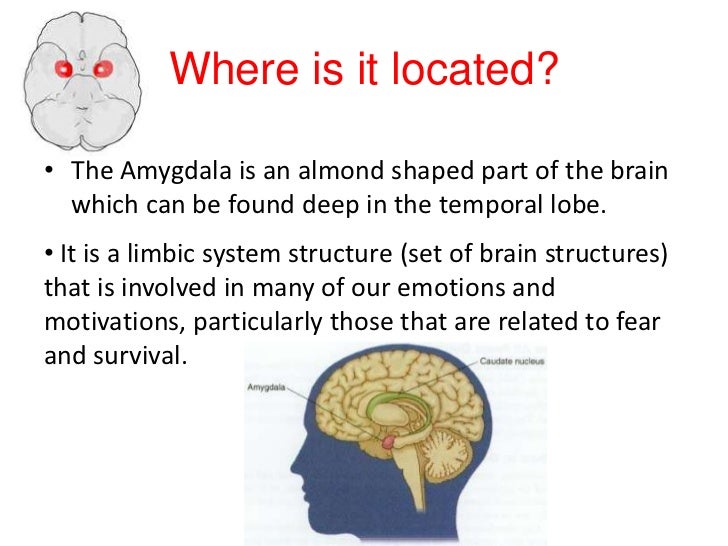
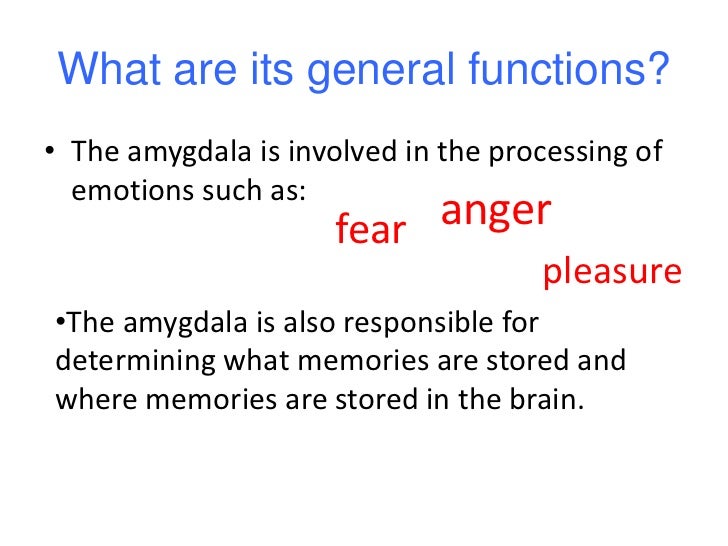
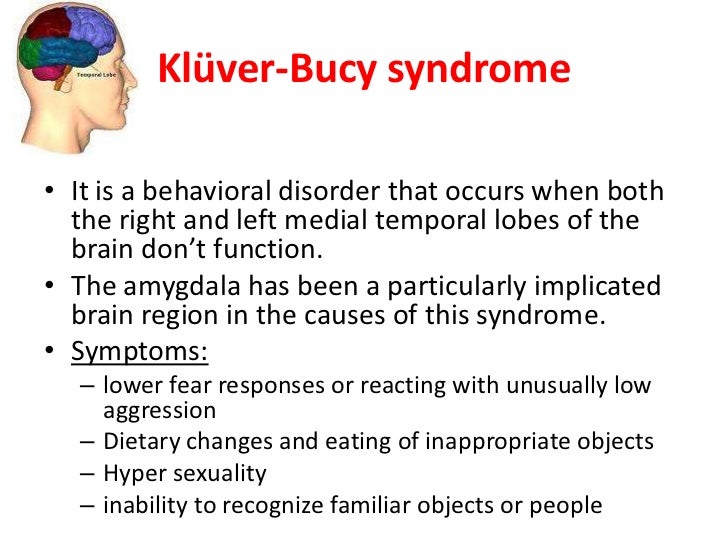
Following 3 images taken from: http://www.slideshare.net/jcrane66/the-amygdala-julie-eva-d 

Image result for amygdala


Study #1: Amygdala and Social Life<br />Psychologist Lisa Feldman Barrett of Northeastern University in Boston, Massachuse...
The Amygdala: Julie & Eva D